November 13, 2026 | Paul Avery, EVP of AI Adoption, Supreme Group
Gene Therapy Commercialization: Lessons From Supporting Launches
With more and more gene therapies now reaching regulatory approval, attention is switching toward successfully launching them into the market. In this episode, I sat down with the Broth team to discuss the unique complexities and challenges of a gene therapy launch and where the traditional drug launch playbook needs to adapt.
We explored what the team has learned from supporting launches and how marketing leaders can best prepare to ensure a successful outcome.
Read on for an edited Q&A of our conversation, or watch the full episode above, on YouTube, Apple Podcasts, and Spotify.
How a gene therapy launch differs from a traditional small molecule drug launch
Paul: What are the main differences between bringing a gene therapy to market and launching a traditional drug?
Allison: With gene therapies, the patient journey is much longer and more complex. It can take 12 to 18 months from preparation to treatment, so it’s a whole process that you’re launching, rather than just a drug.
Liz: Yes, and every player and every step of the process has to be thought through differently. Because it’s often a one-time treatment and the patient requires a lot of preparation and support, the logistics of receiving it are fundamentally different to a traditional drug. It also has to be administered at an authorized treatment center, so the center becomes a key target audience in its own right.
Doug: Gene therapies also commonly target rare diseases, including a lot of ultra-rare ones, so you take on all the additional complexity of rare disease marketing. That means engaging advocacy groups, patients, families, caregivers, and allied health professionals. It’s definitely a different nut to crack!
Winning over gene therapy treatment centers
Paul: Who are the audiences involved in bringing a gene therapy to market, and how does that differ from a traditional drug?
Allison: Gene therapy launches need to reach four core audiences: authorized treatment center staff, referring specialists and other HCPs, patients, and patient advocates. The treatment centers are particularly unique to gene therapy vs a traditional drug. Launch success depends on how quickly those sites are activated and how smooth the patient journey is. It also depends on whether referring physicians know where and how to send patients.
Liz: Within each center, there will also be a champion, often someone other than the treating physician, who ensures the therapy is available, the operational pieces are in place, and logistics run smoothly across the center. These champions are really important because a physician may be ready to prescribe, but the treatment center must still be able to deliver the therapy.
Paul: What’s working right now for companies trying to build relationships with these centers?
Allison: For one, finding a champion at the center, usually an HCP, as this can really help to establish a solid relationship between the sponsor and the center. Every center has its own approval process, including a P&T committee review, and companies need to go in with strong HEOR data and get the pharmacist on board. If a company already has another gene therapy, even in a different disease, the path will already be paved, and the process will be easier.
Doug: Ultimately, this is a two-way partnership. Becoming a gene therapy center can bring a site more patients, so centers are often just as invested in the relationship. What works is giving centers what they need, in the order they need it. That starts with educational materials and a steady flow of referrals. From there, companies build trust by equipping centers to onboard patients and manage logistics at every stage, including long-term follow-up.
For example, many drug development companies now offer a concierge service, with dedicated caseworkers or navigators who work with each patient. Patient numbers are small, but each relationship is deep, and a navigator guides the patient through the process as the person on hand to help,
Taking a gene therapy campaign to market
Paul: How does the campaign approach differ for a gene therapy vs a traditional drug?
Doug: When it comes to a gene therapy launch, the campaigns need to drive awareness, but only a small group of patients will be eligible. It’s often best to use advanced targeting tactics with digital marketing, as this helps you reach the right people with messaging as precise and personalized as the science behind it.
Paul: How early does planning need to start for a gene therapy campaign launch?
Liz: For a typical drug launch, agencies like ours get involved a couple of years ahead to support the pre-launch work. With gene therapy, there are more audiences, more referral patterns to map, and more operational planning, so that work needs to start even earlier.
Doug: The risk of not starting early is that a gene therapy launches before it is truly available in a particular location. If physicians and patients hear about it but can’t get it, or would have to travel a thousand miles to reach a center, that frustration shapes how the therapy is seen for a long time.
Liz: With gene therapy, you also often get a bolus effect where there’s a surge of patients right after launch and then it tapers off. These are people who were already diagnosed and waiting for the treatment to become available, but that group is limited, and because most gene therapies are one-time treatments, once those first patients are treated, demand can drop quickly. To avoid that, sponsors need to think about how they can keep identifying eligible patients well beyond launch.
Paul: How is engaging HCPs different for a gene therapy launch?
Doug: Rare disease gene therapies often reach the market on trials of fewer than 100 patients, so most HCPs have little clinical data to draw from. To help build confidence and show what these therapies really mean for patients and families, it’s important that we go beyond the data by gathering patient stories, recruiting patient ambassadors, and sharing medical case studies. When the data set is this small, patient stories carry real weight.
Building patient trust in a one-time treatment
Paul: Patients are being asked to make what may be a life-changing decision. How do you build their trust?
Doug: The best way to build trust is through authenticity and that’s especially true in rare disease, where communities are small and closely connected. Patients and caregivers are often experts in their condition, and they can tell quickly whether a company really understands them.
Allison: Patients also want to hear from someone like them who has been through it, so patient testimonials and KOL endorsement really matter, even more so than for a traditional drug. Companies should find patient advocates early and, where they can, involve patients from the clinical trials in marketing content creation.
Paul: How do you help patients understand something as complex as a treatment that changes their DNA?
Allison: The messaging should be more educational than promotional, and as I previously mentioned, it should be informed by patients, where possible. We often run co-creation sessions with patient advocacy groups and advisory boards of patients and caregivers because their input helps us shape messages and materials that really resonate.
Liz: For many of our gene therapy clients, we’ve made mechanism-of-action videos that start with the basics of what a gene is and how genetics works. From there, you can show how the therapy works and what it could do in a visually engaging way. The science gets technical quickly, so making it relevant and seeing patients understand it is very rewarding.
It’s also worth bearing in mind that education needs to go beyond how the therapy works to cover the broader implications of how it could impact the patient and potential side effects. For example, if a particular gene therapy involves conditioning, patients may not be able to have children afterward, so educational information on fertility preservation is also critical.
Paul: Has anything surprised you about what resonates with patients?
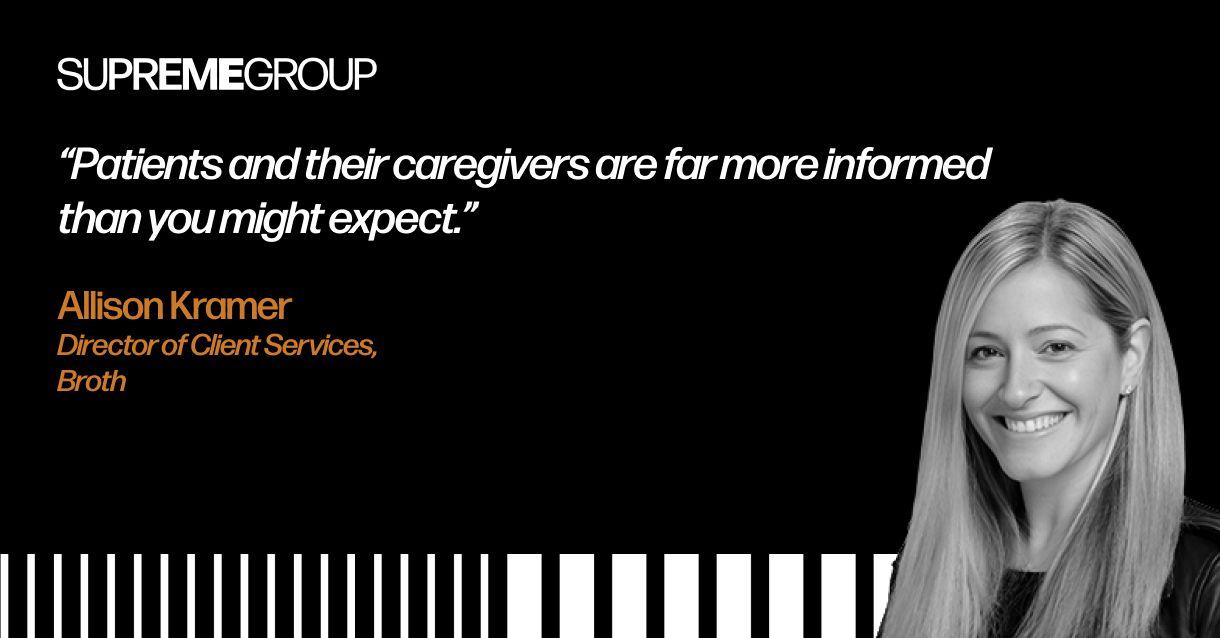
Allison: Given the complexity of the science, patients and their caregivers are far more informed than you might expect. They’ve lived with these conditions for years, and the communities are close-knit, sharing advances, upcoming clinical trials, and the differences between therapy types.
Doug: You’d assume that a treatment that ends the need for regular blood transfusions would always be welcome news, but for some patients, those clinic visits are part of their social routine. Many patients identify with their disease because it’s part of who they are, so messaging needs to be sympathetic to this.
Liz: It was also a learning curve to realise that sometimes if a patient is managing well on an existing treatment, they may not be motivated or prepared to explore a gene therapy, particularly given the commitment required. For example, many gene therapies involve months of eligibility testing and insurance approvals, plus travel to a specialist center. Some also require stem cell collection, chemotherapy, and weeks in hospital, followed by years of monitoring.
The key takeaways from our conversation
A gene therapy isn’t just a drug, it’s a complex process, and launching one requires a different commercialization playbook. To ensure the successful launch of a gene therapy, commercial and marketing leads should:
- Have a clear strategy for engaging treatment centers and building relationships with key stakeholders, including the operational champion, not just the prescriber.
- Co-create with patients and advocates, and never underestimate what they already know.
- Use patient stories, case studies, and ambassadors to build HCP confidence, especially when data from clinical trials is limited to 100 patients.
- Start planning earlier than for a traditional drug. Onboarding treatment centers takes time, so marketing needs to stay aligned with market access and site activation teams.
- Ensure campaigns are highly targeted and personalized, since only small groups of patients are eligible.
Preparing for a gene therapy launch? Talk to the Broth team.
You can find the full conversation on YouTube, Apple Podcasts, Spotify, or wherever you get your podcasts.

