July 8, 2026 | Paul Avery, EVP, AI Adoption, Supreme Group
What AI-Native Means For Life Sciences and Healthcare Marketing
How can healthcare and life sciences organizations safely and compliantly adopt AI for marketing? And what potential benefits are unlocked when a marketing team becomes truly AI-Native?
I unpacked this topic on the latest edition of the Supreme Pod with three of the people who shape how Supreme Group thinks about AI: Sheldon Zhai, Founder and Chief AI Officer, Paulo Simas, Head of AI Growth, and Ramon Felciano, Board Member and AI Advisor.
Read on for an edited Q&A of our conversation or watch the episode in full above, or on Spotify, Apple Podcasts, or YouTube.
On the Big Healthcare and Life Sciences Marketing Challenges that AI is Helping to Solve
Paul: When you’re having discussions with life science and healthcare clients, what sort of challenges are absolutely top of mind for them, and how does technology play a role in the solution?
Sheldon: The majority of companies we speak to want to be more competitive, and one of the main reasons they retain an agency is for ideas. In the age of AI, the good ideas are increasingly about how to use AI to your advantage to deliver better results, faster.
We recently had a project with a pharma client who needed a specific website done in three months . Their other agency, who is not AI-native, couldn’t deliver it, but we said, “Let’s do it and we’ll do it in seven days.” Seven days to create a whole website, including content and design, and get it through legal and regulatory is unheard of. Their legal team didn’t believe we could do it, but we did it, and it’s a great website.
Paulo: Clients are also trying to figure out how AI fits into their work, and the landscape is overwhelming, with hundreds of tools and platforms. What many of them need is someone who can provide guidance on the right solution and curate and centralize it.
The only reason we could deliver the website Sheldon mentioned in seven days is because we already had the brand’s knowledge baked into a single environment—messaging, positioning, assets, visual brand language—and because we deeply understand the pharma regulatory process.
On Common Misconceptions Around the Use of AI in Life Science & Healthcare Marketing
Paul: Can you talk me through some of the misconceptions that clients have about what deploying AI should look like?
Sheldon: A single tool or chatbot is not the change that will deliver ultimate value. You really have to look at each and every workflow and think strategically about how you reinvent it using AI.
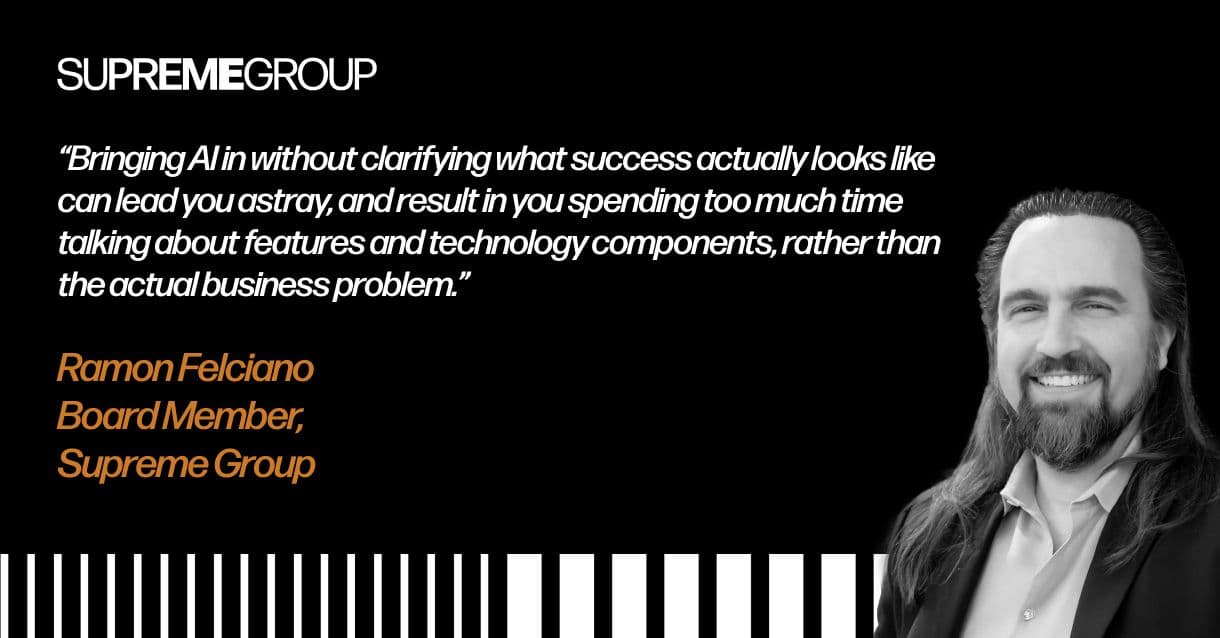
Ramon: Yes, bringing AI in without clarifying what success actually looks like can lead you astray, and result in you spending too much time talking about features and technology components, rather than the actual business problem.
I’m very bullish on professional services organizations being the tip of the spear on AI value. They’re already built to think deeply about what customers care about, empathize with their problems to the point where they feel an ownership of it, and then figure out what to do with the technology to provide a solution.
On Successful Adoption of AI Across an Organization
Paul: How’s this landing with the internal team? How do people feel about this transformation?
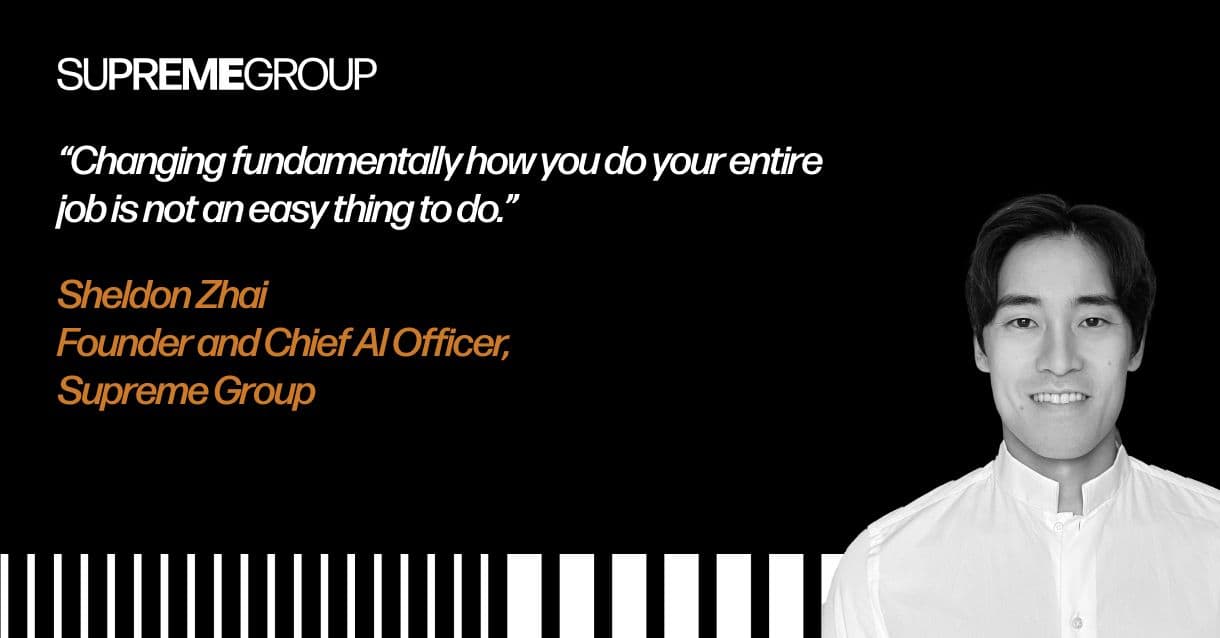
Sheldon: I’ve been really pleasantly surprised and honestly really proud, because changing fundamentally how you do your entire job is not an easy thing to do. We have a strong culture where people are naturally curious, they want to learn, and they’re passionate. You can’t do this type of change without having the right people. Honestly, you can scream, you can shout, you can threaten people, but people just have to walk through the door themselves.
Paulo: Change is inevitable, and it’s just a matter of how you show up to it. There’s a natural anxiety, no question about it. Is it going to take my job? No, it is your job. You’ve just redefined how you show up in the morning.
Ramon: Traditionally, when organizations have tried to go through changes like this, it’s often been a top-down mandate or a push. What we’re seeing here is that the change is happening organically from the ground up, from the folks who are on the front lines.
On Being AI-Native: What It Is and What It Is Not
Paul: What does being AI-Native mean at Supreme Group?
Paulo: When we say AI-Native, it’s thinking about rebuilding the infrastructure of our business from the ground up. There isn’t one part of our organization that isn’t touched by AI or actually driven by AI. It isn’t just saying “we use ChatGPT”. If you’re just looking at point solutions or adding on something that allows you to do one function, but that function doesn’t lead to the next, then it doesn’t change the actual workflow itself.
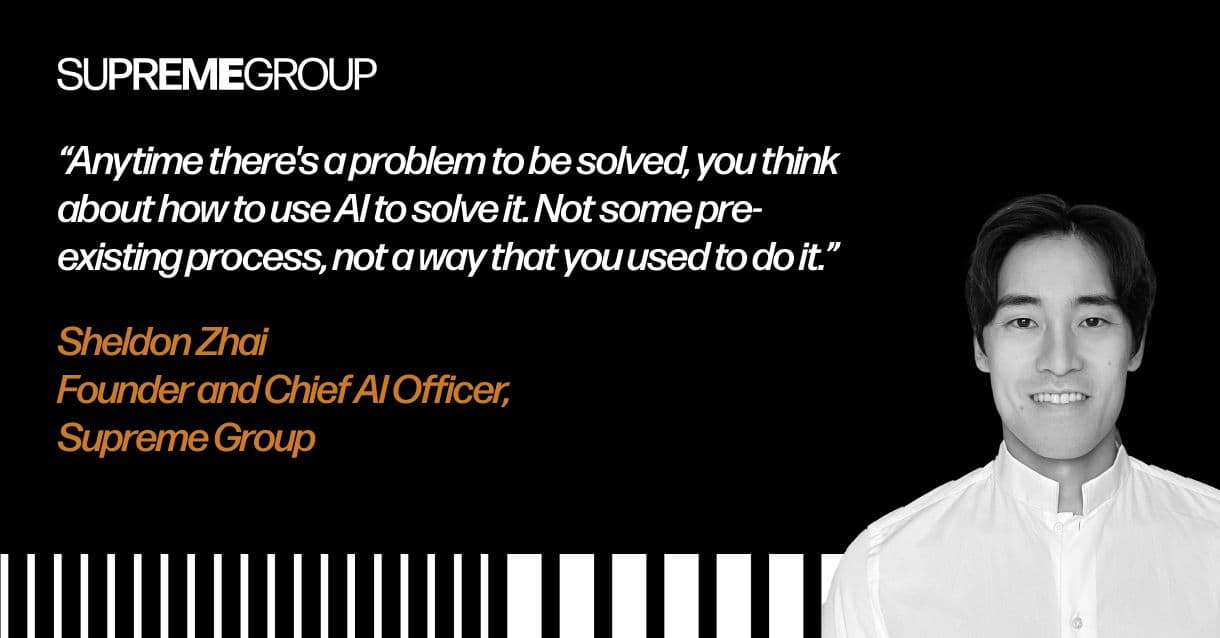
Sheldon: Anytime there’s a problem to be solved, you think about how to use AI to solve it. Not some pre-existing process, not a way that you used to do it in the past, but how do you use the tools that you have and your knowledge of using AI to solve the problem? That’s what it is to be AI-Native.
Ramon: And a lot of the problem-solving that we do is fundamentally a design activity. The shift doesn’t require a radical overhaul. Small but powerful adjustments to how you design workflows and documents, so both humans and AI can participate, are enough. Once that becomes second nature, you stop asking “should I use AI for this?” and start asking “how am I going to use AI for this?”
Paul: How does being AI-Native differ from being AI-Dependent?
Paulo: Some folks depend so much on AI solving every problem for them that they forgot they actually have human capacity as well. I have 30 years of experience. I’m going to pull from that. But now with AI, you are supercharged. The ability to say that we’re using AI to make ourselves that much more powerful, yes, that’s what makes us native to the technology.
On the Evolution of AI Solutions
Paul: What is it that AI is doing for you today that it couldn’t do a year ago?
Ramon: A year ago, AI was a very interesting alternative to a Google search. Now we’re at the point where it can also be an interesting thought partner in terms of understanding a problem, exploring different design options, and then taking one of them and running with it.
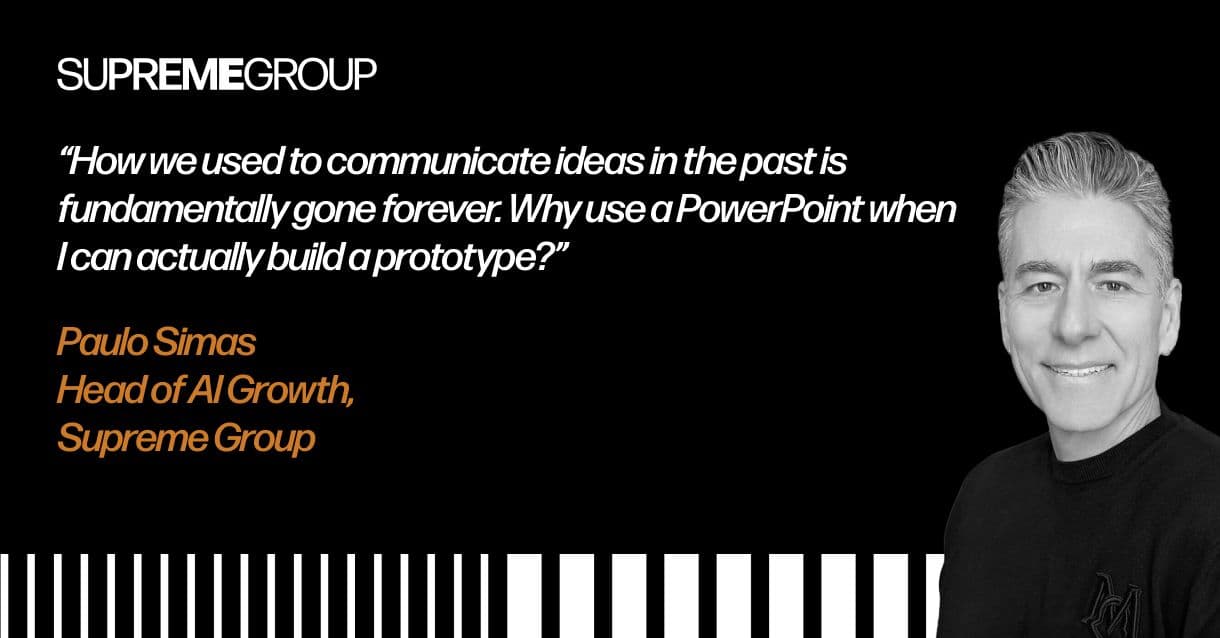
Paulo: How we used to communicate ideas in the past is fundamentally gone forever. Why use a PowerPoint when I can actually build a prototype?
Six months ago, building a fully interactive, clickable omnichannel content experience for a client pitch would have taken weeks or months. Now we can prototype it in hours, complete with messaging, channel strategy, and audience insights from synthetic modeling. Clients can experience the idea rather than just hear about it.
Sheldon: AI is now a force multiplier for healthcare and life sciences marketing experts. For years, a technical skills gap sat between deep domain knowledge and an actual deployed solution. AI has definitely closed that gap. Now, when I or members of the team have an idea, we can act like a software engineer to create the tools we need to solve complex problems.
Paul: What does all of this look like in two years?
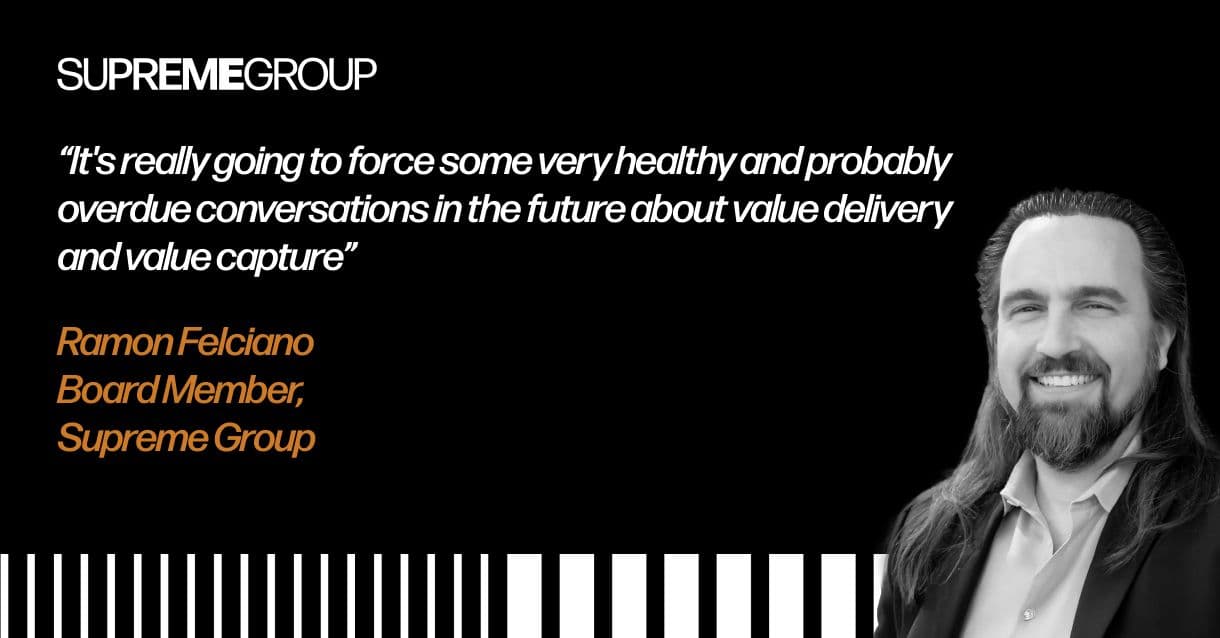
Ramon: It’s really going to force some very healthy and probably overdue conversations in the future about value delivery and value capture. I believe it will encourage organizations to become more insightful than they are today about what the real levers are that drive their company forward.
Sheldon: I predict that a lot of humans are going to be working at the edges, with the things that AI can’t touch. ‘The edges’ meaning live human events like a dinner with a client, where you’re building relationships and collecting qualitative data. This is the edge that humans have, and AI will be everything in the middle.
Paulo: In the future, if AI can help us drive more efficiencies in certain areas, maybe that will give us back more time for human intelligence and human power.
The Key Takeaways From Our Conversation About Being AI-Native in Life Sciences Marketing
The organizations winning in healthcare and life sciences marketing right now are not the ones adding the most AI tools. They’re the ones rebuilding around AI as an operational infrastructure. What that requires is a curated data foundation, strategically rebuilt workflows, and a team of curious people willing to adapt and learn.
Becoming AI-native is a business transformation that is not easy. But as Sheldon, Paulo and Ramon made clear, the results in terms of smarter, faster outputs and better outcomes more than justify the effort.
For more from Sheldon and the team on AI-Native Marketing and the thinking behind Supreme Intelligence FDE+, listen to the full episode of The Supreme Pod. You can find it on Spotify, Apple Podcasts, YouTube, or wherever you get your podcasts.

