February 17, 2026 | Paul Avery, VP Marketing Supreme Group
The Rise of AI Platforms in Life Science & Healthcare Marketing
If AI is as transformative as the market buzz would have you think, why are so many healthcare and life science marketing teams still frustrated by the gap between the hype and their actual results? Where are the current suite of AI tools falling down, and what can be done to improve performance?
To answer these questions, I sat down with Sheldon Zhai, Founder and Chief AI Officer at Supreme Group, and Leigh Wasson, SVP of AI and Innovation at Supreme Group, for the latest episode of The Supreme Pod.
During our conversation, we explored everything from the limitations of point solutions and chat-based tools, to the challenges of keeping pace with rapid technological change. We also discussed the security and governance considerations that complicate adoption in regulated industries like healthcare, why top-down AI adoption mandates often backfire, and how end-to-end AI platforms are emerging as the path forward for healthcare and life science marketing teams looking to capture real value from AI.
You can watch the episode in full above, or read the blog post below for a summary of our conversation.
Is AI in Life Science and Healthcare Marketing Overhyped?
Social media feeds overflow with breathless claims about AI transforming businesses and marketing teams overnight. Vendors promise revolutionary marketing-specific capabilities. Thought leaders share stories that bring a sharp stop to your scrolling. However, it can all feel a little hard to believe.
When asked if AI in marketing is overhyped, Sheldon offered a blunt assessment: “It’s not overhyped if it’s the right people saying it”, the right people being those that know AI and the nuances of its application in a given industry. ”But it is overhyped by all the people that are spreading vaporware and not actually delivering.”
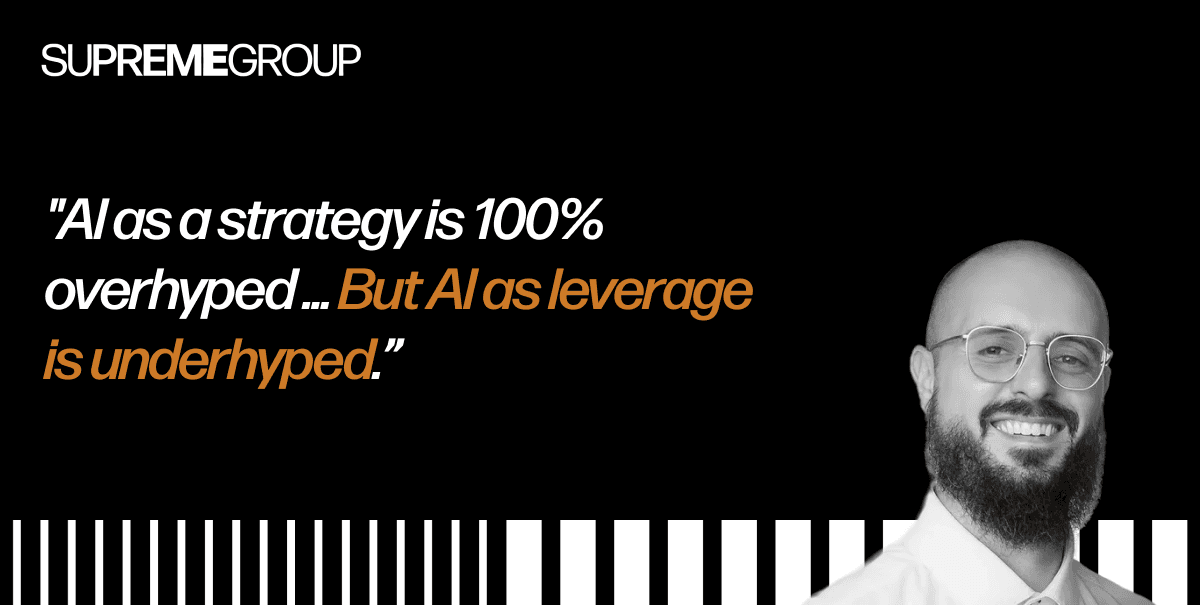
Leigh weighed in from a different angle, noting that how people think about AI’s role determines whether hype is at play. “AI as a strategy is 100% overhyped,” he said. “But AI as leverage is underhyped.” Put simply, organizations shouldn’t be asking, what is our AI strategy? Instead, they should ask, what is our business strategy and where can we gain outsized leverage using AI?
Great. So if it’s not all hype, what is still standing between healthcare and life sciences marketing teams and the true value of AI? A sizable list of things, it turns out.
Challenge 1: Point Solutions Create Problems
For teams that start adopting AI tools as part of a larger business strategy, a key challenge emerges fairly early: a lot of the available solutions are point solutions, and these tend to solve one problem, often at the cost of creating others.
Leigh highlighted a common healthcare marketing team example: “The challenge with point AI solutions is that yes, you may be able to speed up one part of your process, but you create downstream bottlenecks. You may be able to accelerate your content creation, but then you have a pile up on MLR review.”
The proliferation of point solutions within a marketing team also creates a significant management burden. Different tools are used for different tasks, each with their own interfaces, data models, and learning curves. The integration work then typically falls on already stretched teams, and the promised simplicity enabled by AI becomes… not so simple.
Beyond the operational headaches, there is a more fundamental problem with point solutions: they fragment how your team sees and acts on its own marketing strategy. A content creation tool operates without any awareness of what messaging is performing in the market. An analytics platform can surface what is working, but has no connection to the creative workflow where teams could act on those insights. An asset generator produces visuals without knowing what has already been approved or which messages resonate with specific audiences.
Each tool touches a different part of the marketing operation, but none of them can connect insight to action across the full workflow. The result is a collection of individually capable tools that, taken together, leave teams unable to see the bigger picture or make decisions informed by the complete context of their marketing activity.
Challenge 2: The Recontextualization Burden
For most life sciences marketers, exposure to AI begins with (and rarely extends beyond) chat-based tools like ChatGPT. But anyone who has spent time with chat-based AI tools knows that productivity gains can hit a ceiling fairly quickly, especially on more complex tasks that require a lot of context and back-and-forth conversation with the chatbot.
Leigh aptly summarized the problem as having to “constantly recontextualize [the] chat,” and highlighted the frustration that comes with constantly having to re-explain who you are, what you’re doing, and what your business offers every time you start a new session.
In life science and healthcare marketing, this burden is heavier than in most industries. A useful interaction often requires the chatbot to understand your products, brand positioning, audience personas, regulatory constraints, approved messaging frameworks, and the nuances of your therapeutic/research area before it can produce anything worthwhile. Without that context, outputs tend to be generic at best and non-compliant at worst, requiring so much manual correction that the time savings disappear.
The frustration of repeatedly loading this context, especially after a deep and productive session that cannot be carried forward, is often enough to drive people away from AI tools entirely. What’s more, once a team member decides the tools aren’t worth the effort, the bar for getting them to try again goes up considerably. While tools like custom GPTs and projects seek to solve this by storing critical context, in practice, chat tools don’t tend to draw on that context in a way that adds true value and utility.

Challenge 3: Security and Governance Barriers
Patient data protection, compliance requirements, and the scrutiny that comes with operating in a heavily regulated space all create additional considerations when adopting any new technology. But the AI tool space can be particularly risky.
For example, new AI tools are being released at a pace far beyond the ability of many teams to effectively vet them. As such, when team members use or experiment with new consumer AI tools, they may inadvertently expose sensitive data. Unfortunately, for healthcare organizations, the stakes of such an event are particularly high.
Yet, to get the most out of AI, teams do need to experiment with these new tools. The challenge is finding an appropriate balance. Lock everything down completely, and you lose the agility that makes AI valuable. Let everyone experiment freely, and you expose the organization to unacceptable risk.
Getting this balance right requires what Sheldon called “top-down control, but grassroots bottom-up ability to be agile.” In other words, security and governance policies need to be set at the organizational level, while individual teams must retain the flexibility to build and experiment within those guardrails.
Challenge 4: The Adoption Problem
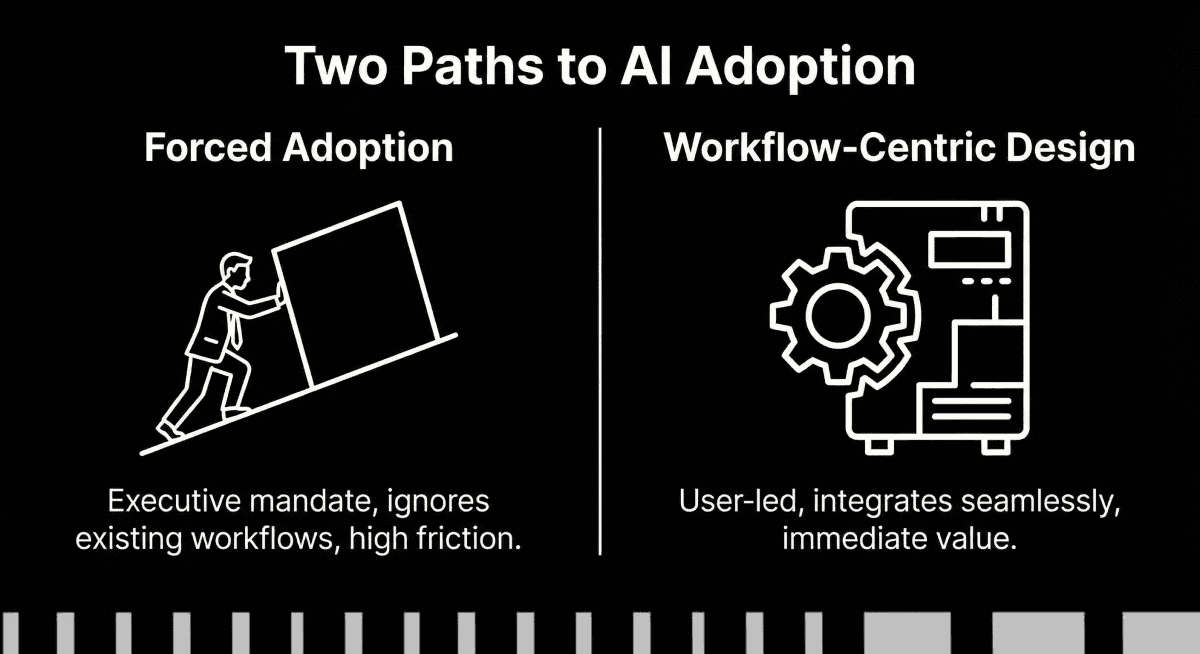
Beyond the technical and security challenges, there is a human dimension that often gets overlooked. AI pilot failure rates are high at the current time, and Sheldon believes forced adoption is one of the key culprits. “Lots of these AI pilots are forced, top down,” he said. An executive decides the organization needs to “do AI,” and a mandate comes down. Teams are told to use specific tools or adopt new workflows, but employees have their own ways of working, and often know best whether (and where) these tools can actually help. When new tools and approaches are wildly at odds with how a team operates, resistance follows.
The alternative, according to Sheldon, is to make people genuinely want to use the tools. “You have to approach it a little bit differently, more thoughtfully,” he said. In practice, that means designing AI-enabled workflows around how on-the-ground teams actually work rather than how executives think they should work. The tools need to make people’s jobs easier in ways they can feel immediately, not add another layer of complexity to an already demanding workload.
Challenge 5: The Pace of Change
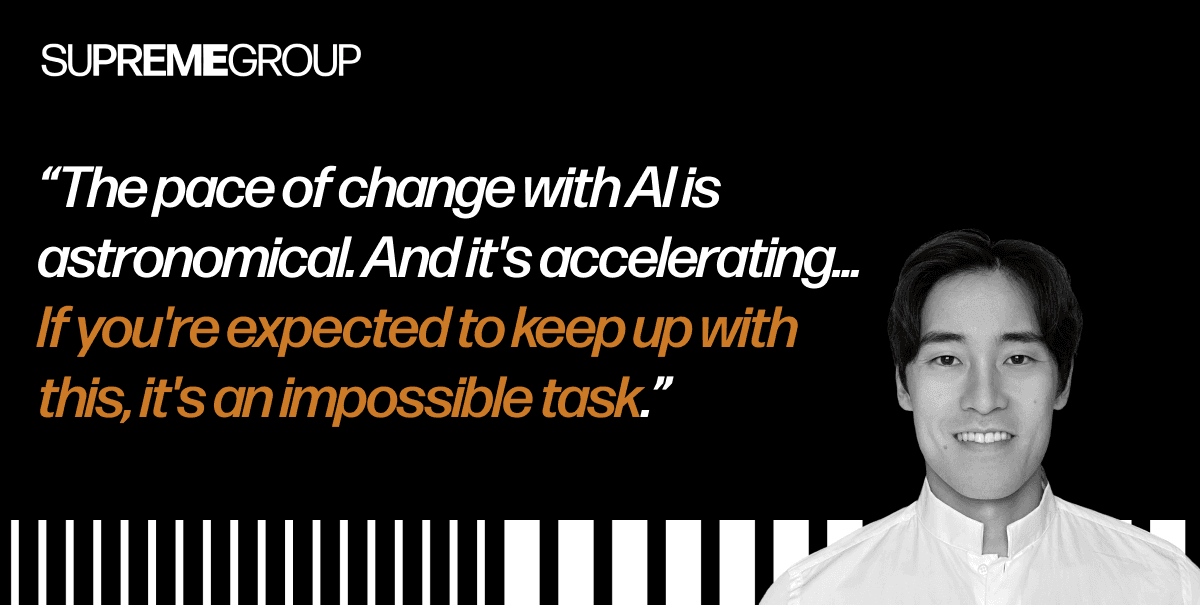
Even for teams that navigate the adoption challenge successfully, there is a further problem: the ground keeps shifting. “The pace of change with AI is astronomical. And it’s accelerating,” Sheldon said. Foundation models are updated or replaced on a regular basis. New tools emerge weekly. Capabilities that were cutting edge three months ago can feel outdated today. For marketing leaders already running campaigns, managing teams, and hitting targets, staying current with all of this is an impossible task.
The bigger concern is what happens when a deployment falls behind. After investing time evaluating, selecting, and rolling out a tool, teams can find themselves back at square one remarkably quickly. As Sheldon put it: “Let’s say you do finally choose some of [the available AI tools], and then one month later, it’s not even good anymore, or the right tool, or the right model… to solve your problem. Now, you have to go back to your team and admit that it didn’t work as expected.”
The cost of such a cycle goes beyond wasted time. Each outdated deployment erodes the credibility of AI initiatives within the organization, making it harder to secure buy-in for the next attempt. For marketing leaders, this places an even greater onus on selecting a flexible AI toolset that can evolve with the needs of the team, rather than requiring constant switching (and causing whiplash for the team in the process).
Overcoming These Challenges: The Rise of the End-to-End AI Platform (AIP)
After navigating point solution fragmentation, recontextualization fatigue, rapid technological change, security constraints, and adoption resistance, healthcare and life science marketing teams could be forgiven for wondering whether AI can deliver on its promise at all. However, the challenges outlined above share a common thread… They are symptoms of a fragmented approach to AI, not limitations of the technology itself.
As such, the answer is a new way of looking at AI solutions for marketing: the AI platform (AIP). Rather than a collection of point solutions or a simple chat interface, an AIP brings together multiple capabilities in a unified, secure, and governed environment that can support marketing activity from start to finish.
In practice, this means the entire marketing process, from strategy through to activation and measurement, happens within a connected and contextualized system rather than across fragmented tools. Strategy documents, personas, and market research that previously sat unused in folders become operational assets that AI can reference in real time. Live campaign performance and competitor activity data becomes accessible within the same workflow where strategies get planned and content gets created.
Sheldon compared the AIP concept to the smartphone to illustrate why bringing these components together matters so much. “A camera by itself is nice… [and] you have a computer that has the internet. But when you put those things together, you create the killer platform, which is the [smart]phone,” he said. Each individual capability has value on its own, but the real unlock comes from connecting them within a single environment where they can inform and build on each other.
Sheldon also sees this shift as inevitable. “Companies are very quickly going to realize they need an AI platform in the same way that they needed a CRM…an ERP… a human resources information management system,” he said. The AIP will become foundational infrastructure that connects other AI tools and data sources that were previously siloed.

The Future: AI-Native Marketing
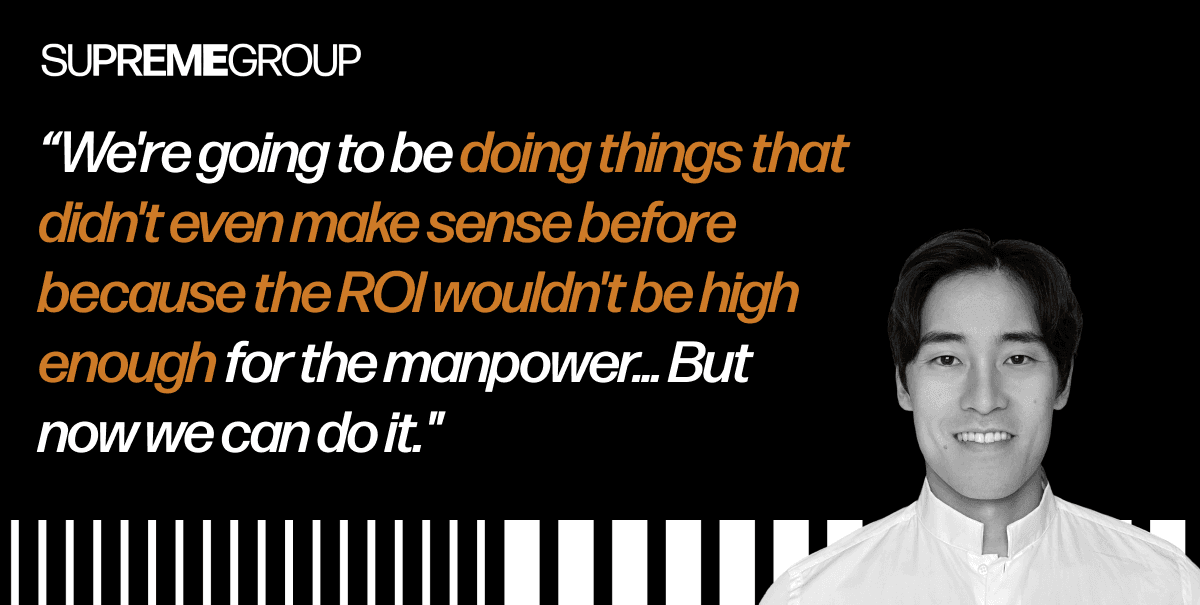
With AIPs becoming a reality, the most immediate change for healthcare and life science marketing teams will be what becomes possible. As Sheldon explained, “We’re going to be doing things that didn’t even make sense before because the ROI wouldn’t be high enough for the manpower… But now we can do it because [with AI] the cost is so low and the speed is so high.”
Leigh offered a tangible example of this in action. Supreme Group’s own end-to-end AI platform, Supreme Intelligence™, recently helped a client “analyze closed-won deals on a number of different dimensions,” identifying commonalities within both the closed-won and closed-lost groups. Previously, synthesizing CRM notes, pitch decks, and scattered insights from sales teams into actionable intelligence would have been prohibitively time-consuming. With an AIP, that kind of analysis can become routine. “The insights were extremely valuable,” Leigh said. “We can use those insights to now guide future campaigns.”
However, an important caveat applies, especially for healthcare brands. Speed without accuracy can be a trap. Leigh was emphatic on this point: “Our number one principle is accuracy over speed,” he said. “Jumping right to speed is definitely a risk and a mistake, especially in a regulated industry.” Curating the right content, establishing traceability, and getting governance right from the start are the investments that make everything else possible. The teams that rush past this foundation in pursuit of quick wins are likely to find themselves rebuilding it later.
Where Do Life Science and Healthcare Marketing Teams Go from Here?
The pressure on healthcare marketing teams isn’t going away. Timelines will get shorter. Regulatory complexity will only increase. And better-funded competitors will still have bigger budgets.
What’s changing is the path forward. Point solutions and basic chatbot usage have proven insufficient. The real unlock lies in AI platforms that connect curated knowledge with live data and end-to-end workflows, all within a secure, governed environment, supported by experts who understand both the technology and the realities of healthcare marketing.
The shift from fragmented tools to integrated platforms, from chat outputs to end-to-end deliverables, from top-down mandates to grassroots adoption: these are the moves that separate teams capturing real value from those still wondering why AI hasn’t delivered on its promise.
Ready to go deeper? Listen to the full episode with Paul Avery, Sheldon Zhai, and Leigh Wasson on Spotify, Apple Podcasts, YouTube, or wherever you get your podcasts.

